Long Term Care Workforce Solutions
Two Great Ways to Become a CNA - One Great Curriculum
The need for highly skilled, compassionate certified nurse assistants (CNAs) is more critical than ever. AHCA’s renowned HOW TO BE A NURSE ASSISTANT curriculum can help you address your workforce challenges and frontline staff shortages. Our curriculum meets all federal guidelines, can be adapted for different state-specific requirements and customized for various course length requirements. Available in print for in-person trainings or as a hybrid course, the curriculum produces highly trained CNAs who elevate the quality of resident care for residents in long term care.
As the cornerstone of AHCA's educational resources for more than 35 years, HOW TO BE A NURSE ASSISTANT provides the background and training students need for a career in long term care. Written and developed by experienced nurses and educators, our curriculum provides a comprehensive set of guidelines, instructions, and procedures based on best practices and industry standards blending clinical skills with the art of caregiving to ensure residents receive the highest quality of care.
In-Person Training
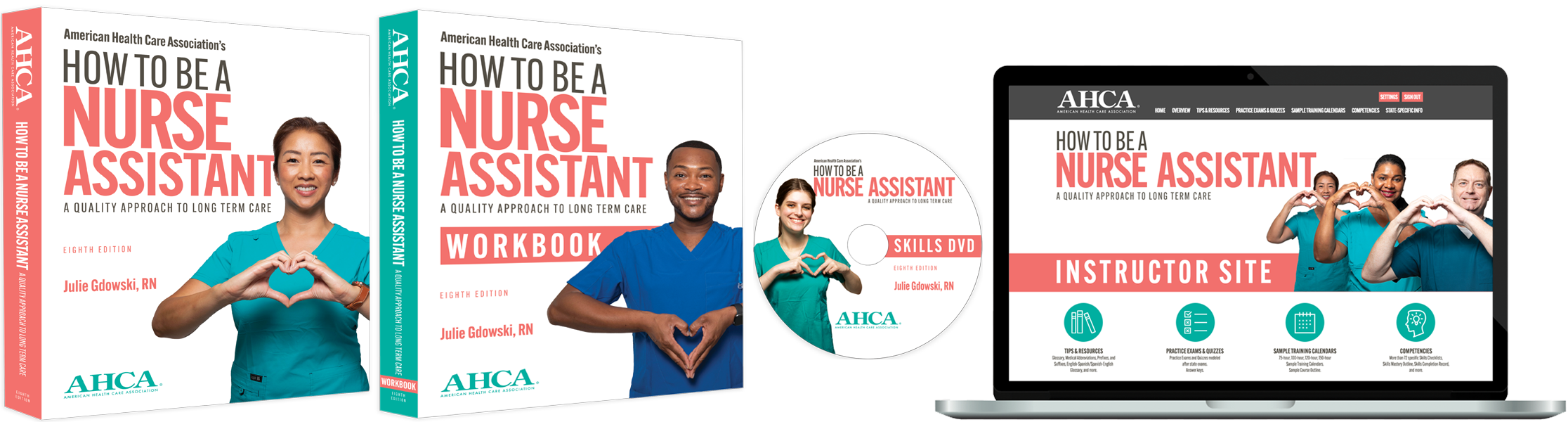
Newly updated and revised in 2022, our comprehensive curriculum is ideal for in-person courses at facilities, colleges, and training organizations. The curriculum suite offers everything instructors need to prepare their students for success, including text and workbooks, an online instructor website, and a skills DVD. Learn more about the full curriculum suite at ahcapublications.org or click the individual components links below.
Curriculum Components Include:
On-Line Training
 CNAonline.com is a unique hybrid nurse assistant training program based on the HOW TO BE A NURSE ASSISTANT curriculum. Blending online coursework with in-person clinical and skills training, CNAOnline is a flexible and affordable way to offer nurse assistant training. This complete, cloud-based, online solution includes an e-book, lectures, and video instruction for students. Students and instructors can access online content 24 hours a day, and classes can start anytime. Learn more at CNAonline.com, or by calling 502-221-7765.
“We have found the HOW TO BE A NURSE ASSISTANT curriculum, way back to even its first edition, to be a great blueprint for caring for our elderly and disabled residents in long term care. It demonstrates the basics while providing important information on nurturing and supporting residents. It’s the best resource we know of for preparing for the certified nurse aide exam, as well as a beneficial reference for staff thereafter.”
- LuAnn Severson, Director of Public Affairs & Professional Development
South Dakota Health Care Association
About the Curriculum
To address a wide-range of learning styles, the 8th edition of the HOW TO BE A NURSE ASSISTANT curriculum offers both text-based and video content. The textbook features updated full-color photos and illustrations, and newly revised skills videos demonstrating steps of important procedures to ensure that students are fully prepared for CNA certification.
Comprehensive and easy-to-read, textbook topics include:
- Long term, sub-acute, and post-acute care
- Infection Prevention and control
- Procedures to ensure quality care, including positioning/ and moving a patient, assisting with nutrition, maintaining/ improving skin integrity, dealing with emergencies, pain management, and end of life care
- Applications of OBRA
- Step-by-step procedures and critical finishing steps
- Caregiving methods to enhance residents’ quality of life
- Strategies for effective communication
- Certification and exam preparation, including quizzes and practice exams
- Preparing for a successful career as a CNA