One of the many life safety compliance topics that can be confusing and difficult to dissect are the requirements around oxygen signage. This is likely why CMS recently added specific guidance around oxygen signage in their “Respiratory Care Critical Element Pathway”. This document provides guidance applicable to areas where residents receive respiratory care services including oxygen therapy.
This new guidance from CMS references the oxygen signage requirements that are outlined in The Healthcare Facilities Code® (NFPA 99). This is home to most of the requirements related to oxygen systems, storage, and signage. CMS has adopted the 2012 edition of NFPA 99. Oxygen signage requirements fall into two categories: signage for oxygen storage and signage when oxygen is in use.
When oxygen cylinders or containers are stored within an enclosure, a precautionary sign is required on the door or gate that is readable from a distance of five (5) feet away. The signage must include the following wording:
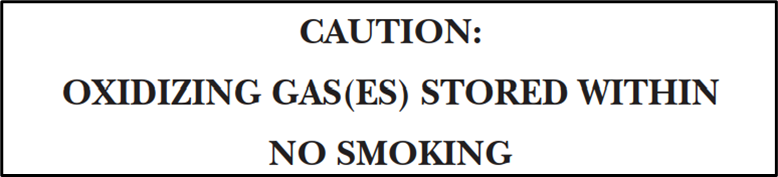
This requirement is intended to apply to rooms and enclosures where multiple cylinders are being stored, however it is not necessary to place signage everywhere an oxygen cylinder is located in a building. For example, cylinders available for emergency use on carts, at nurse stations, and staged in small quantities are not intended to evoke the oxygen storage signage requirements.
The signage requirements that apply when oxygen is being utilized in the building depend on the facility’s smoking policy. A facility that prohibits smoking is only required to provide precautionary signage at the building’s major entry points. However, a facility whose policies do not prohibit smoking are required to provide precautionary signage wherever supplemental oxygen is in use, including the aisles and walkways leading to such areas. In all cases, the signage must be readable from a distance of five (5) feet away. The annex section of NFPA 99 suggests signage be no smaller than 8 X 11 inches and include the following wording and symbol:
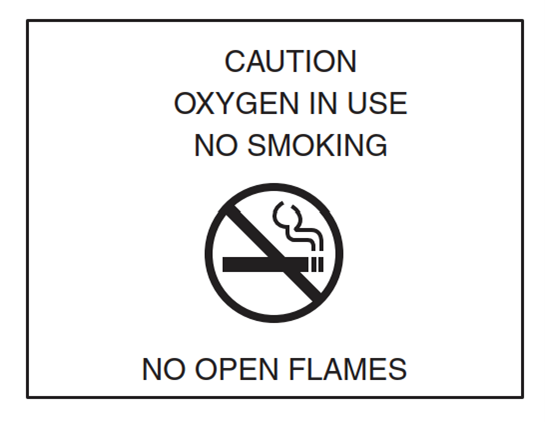
Finally, in situations where liquid oxygen is utilized in the building, and the process of transfilling liquid oxygen from a base reservoir container to portable liquid oxygen containers occurs, the location that the transfilling occurs must be posted with signage indicating that transfilling is occurring and smoking in the immediate area is not permitted.
Complying with the oxygen storage, use, and signage requirements in NFPA 99, in conjunction with the CMS Respiratory Care Critical Element Pathway, will mitigate the potential for survey findings, specifically K741, K923, and F689.
The detailed requirements for oxygen signage can be found in Chapter 11 (Gas Equipment) of NFPA 99. NFPA provides a
free viewer where you can access codes and standards on their website. Hardcopy and user-friendly on-line subscriptions are also available for a fee at
www.nfpa.org.
AHCA is always available to support members with life safety compliance questions. Inquiries can be emailed to
emergencyprep@ahca.org.